Brief
Luminescence dating pushes Mammoth Site age back more than 100,000 years
New dates published in Quaternary Research suggest the mammoths found in a South Dakota sinkhole were more than 160,000 years old, not roughly 26,000 years old as long accepted.
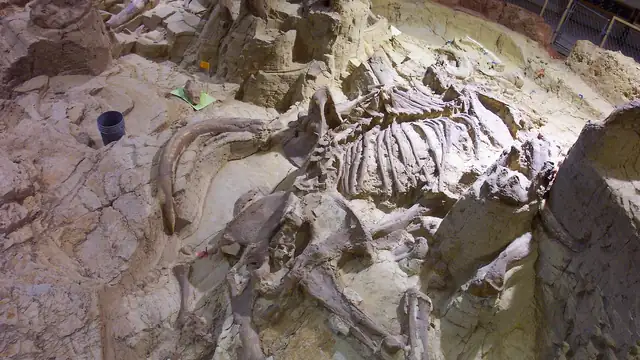

The Mammoth Site in South Dakota holds remains of dozens of mammoths that died in an ancient sinkhole. Their deaths had long been accepted as occurring roughly 26,000 years ago.
Luminescence dating now suggests the ice-age giants were more than 160,000 years old, according to dates published in Quaternary Research. The finding shifts the timeline by more than 100,000 years.
Our reading
Our reading is that the report gives the revised age but not the dating methods or uncertainty estimates, so how firmly the new figure is pinned down remains unclear.
What to do or watch
Watch for the Quaternary Research paper's dating methods and uncertainty estimates, because the supplied report gives the revised age but not how firmly the new figure is pinned down. The unresolved question is whether the more-than-160,000-year date will stand once those details are available.
Source details and supporting facts
Each line is stated by the page named above it.
Stated by phys.org
- Deep within an ancient sinkhole lie the remains of dozens of mammoths
- These deaths had long been accepted as having occurred roughly 26,000 years ago
- New dates published in the journal Quaternary Research suggest these ice-age giants were more than 160,000 years old
Sources
- Phys.orgText stored 14 September 2026
How this story was checked. Written from the 1 page listed above, stored 14 September 2026; claims checked against that stored text on 14 September 2026.
What that means
- 3 of 3 reported statements were confirmed against the page that carries them; the rest were removed rather than published.
- Figures in the text were required to appear in the stored source text: yes. Identifiers: yes.
- The check reads stored text only: no claim rests on a fresh look that did not happen.
- Where the reporting was silent, the text says so instead of filling the gap.